Sketchbook: An Introduction
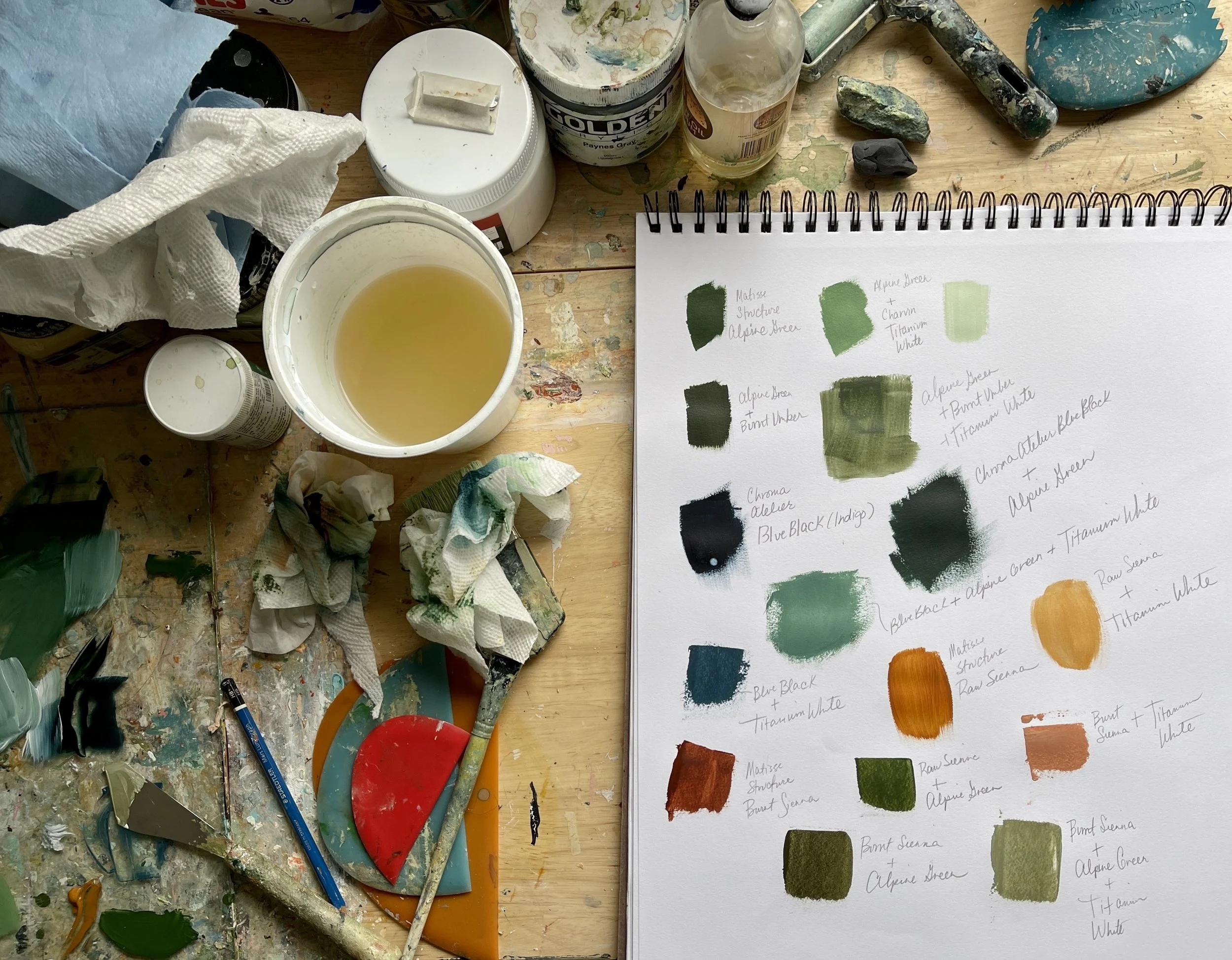
Color swatches in a sketchbook from 2022, when my painting studio was an extra bedroom in our apartment. These colors are still important to me now.
I don’t remember how I first learned about Kening Zhu, but I can trace the first time I began sending myself emails of links to her website.
On April 7, 2024 between 10:20pm and 11:56pm I sent myself seven emails of individual posts that I wanted to hold on to, starting with this one. Many of these related to digital ecosystems and world-building. I quickly subscribed to her newsletter and became obsessed with thoughts of how I could create my own digital world.
I have so many places where I save or share things that I’m pondering. Some of them are public: Instagram, Pinterest, Notes from the Studio, this Artist Journal, Goodreads. Many of them are private: my Notes app, private Pinterest boards, private saved folders on Instagram, saved Substack posts, saved emails, screenshots, photos, quotes, physical sketchbooks.
Sometimes just the thought of the amount of things I have saved feels overwhelming. Except on those days where I actually go to my chosen resource and look through it.
Usually it’s not just what I’m looking for that makes an impact. It’s everything else I find along with it. Things that are interconnected that I wouldn’t have even noticed or thought about had I not started down the path.
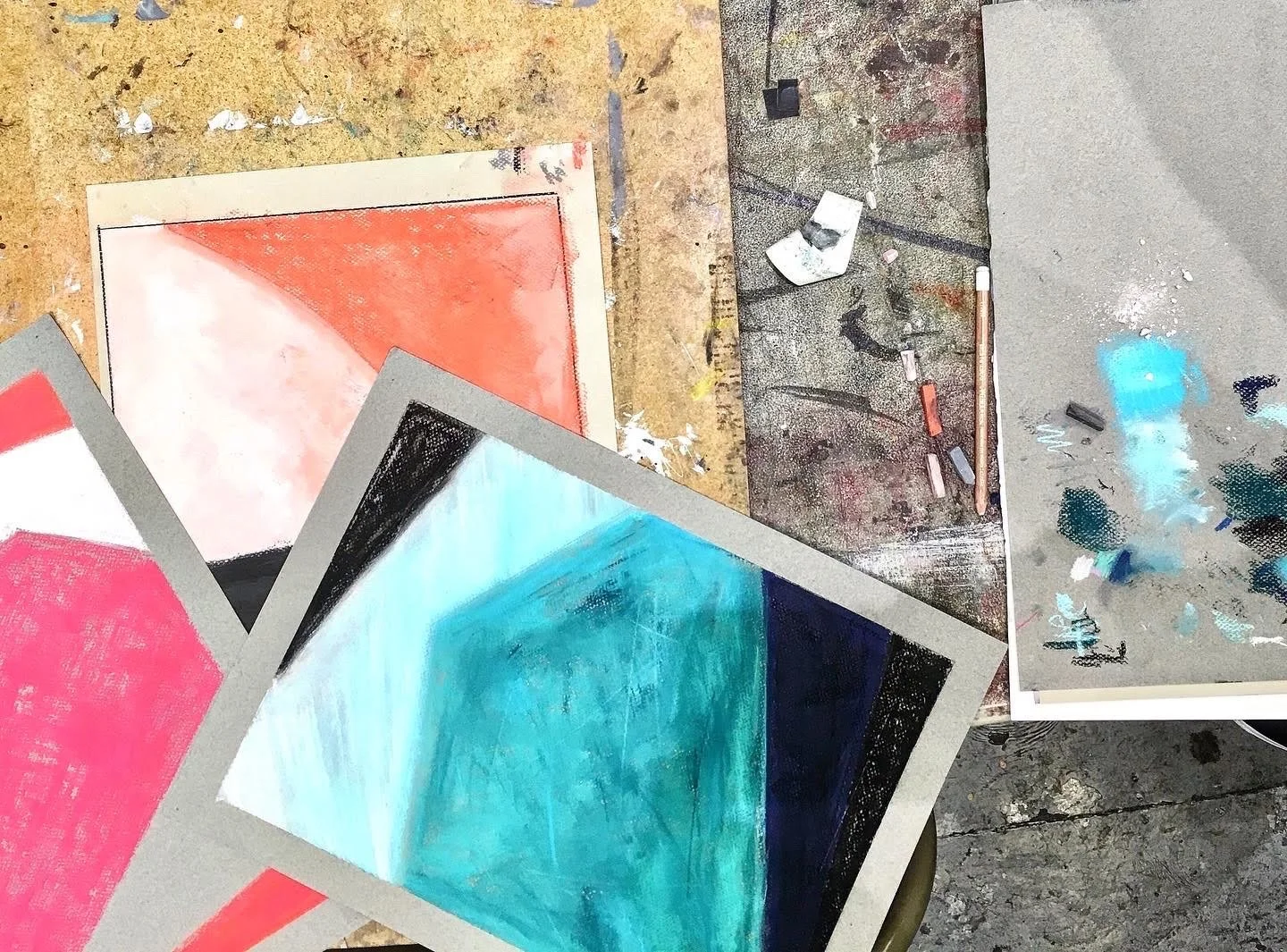
Pastel sketches from my days at Gage Academy of Art, November 2015
My actual physical sketchbooks are less like any of the images I’ve shared here. I don’t often sketch, and have mostly used sketchbooks for notes, random thoughts, magazine clippings, occasional actual sketches or color palette ideas, personal ephemera, or lists.
I rarely use physical sketchbooks in my art practice now, maybe just a page or two occasionally. But my ideas and obsessions get filed away in those places that I mentioned above.
What I truly want for my Sketchbook category here is to build a place that I’ve been coveting since 2024 — my own creative world.
A place where I can explore in public without feeling like the idea has to be fully formed.
Maybe it’s just a quote I love from a book that I can’t stop thinking about. Or the Substack post that led me back to Kening Zhu recently. Or a quote that led to a Pinterest board that reminded me of a book that led to a trip that ignited the spark for a painting…imagine one post that allowed me to link or explore all of these various paths together.
You might be asking, “Can’t you do this on Instagram or Substack? Don’t you already?”
Yes. I could. But I wouldn’t be able to find it again as easily and wouldn’t get to build on it in a way that I see my own creative world evolving.
Plus sometimes I just want to share short bursts of things, or posts that I may have previously shared on Instagram that still ring true. I wouldn’t want you to get a Substack email every time I had something that I felt compelled to share here. (Although I will include links to recent posts whenever I send my Substack, so you can subscribe if you want to read them but not come back here all the time.)
Sometimes a sketchbook entry will be about bringing things back. Too often I explore an idea, a place, a series, etc., and feel like I can’t return. I’ve already done that. But returning is life. Returning is art. Returning is beauty. You might even say that returning is part of the essence of being an artist.
And then there’s the whole exploratory feeling that doing it this way gives me.
I see Sketchbook as part of my creative process, not a blog post.
I’m not just doing it to communicate with you. It’s primarily a practice for me — to write more often, to look back at the things I’ve saved and find out what spoke to me and why, to learn more about myself and my own interests and point-of-view.
But just because it’s for me, doesn’t mean we don’t both benefit. I believe that while participating in this process my relationship with my own creativity deepens as does my relationship with you.
I’m always open to receiving emails from you to have conversations and discuss this stuff more. That feels fun to me. I just don’t want to open comments/conversations on the posts themselves because that could potentially make me feel like I need to make things more fully formed, like my newsletter or even Instagram.
I need to allow myself to let this space be free.
Related Notes: Optimize less. Feel More.
Notes From The Studio
If you’re drawn to artwork shaped by atmosphere, memory, and the emotional experience of place, I share personal and studio reflections along with early previews of available work through Notes From the Studio.